
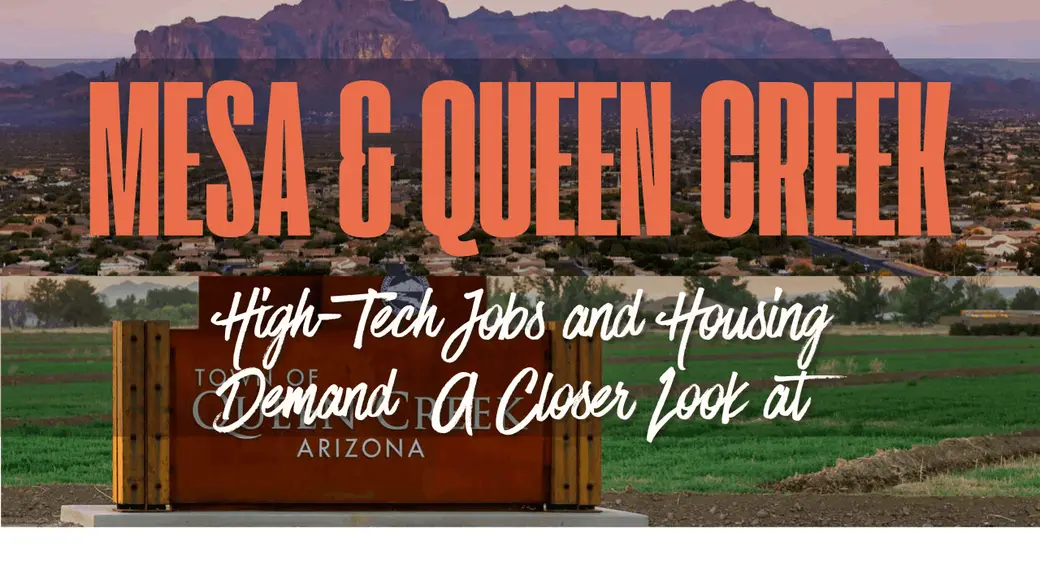
High-Tech Jobs and Housing Demand — A Closer Look at Mesa & Queen Creek
Over the past couple of years, something subtle has been happening in the East Valley.
It’s not just new homes going up or traffic getting a little heavier during rush hour. It’s the kinds of conversations people are having—about work, commutes, and whether renting still makes sense when plans suddenly feel more long-term.
Much of that shift can be traced back to the rise of high-tech and advanced manufacturing jobs in places like Mesa and Queen Creek.
Mesa: Where Tech Growth Feels Established
Mesa’s growth hasn’t happened overnight. It’s been building quietly, layer by layer.
With aerospace, advanced manufacturing, and tech-focused employers expanding near the Gateway area and surrounding corridors, Mesa has become a place where high-skill jobs feel rooted. These aren’t short-term roles—they’re careers that encourage people to stay put.
That stability shows up in the housing market.
Buyers in Mesa are often looking for:
-
Homes close to work without sacrificing neighborhood feel
-
Space for remote or hybrid work setups
-
Established areas with long-term resale confidence
Mesa appeals to people who want growth without chaos. The city feels familiar—but clearly moving forward.
Queen Creek: Rapid Growth, New Opportunities
Queen Creek feels different.
Here, high-tech investment is more visible. Large facilities, new infrastructure, and expanding employment centers have turned what was once considered “out there” into one of the East Valley’s fastest-changing markets.
For many workers, Queen Creek represents opportunity:
-
Newer homes with modern layouts
-
Larger lots compared to more central cities
-
Shorter commutes to expanding job hubs
Housing demand here is often driven by people getting in early—buyers who see where the area is headed and don’t want to wait until prices catch up.
How Tech Jobs Are Changing Buyer Behavior
What’s interesting isn’t just the number of jobs—it’s how they’re influencing decisions.
High-tech and advanced manufacturing roles tend to come with:
-
Higher income stability
-
Long-term employment outlooks
-
Hybrid or flexible work schedules
That combination shifts priorities. Buyers aren’t just asking “What’s the cheapest option?”
They’re asking:
-
Can I see myself here in five or ten years?
-
Is this close enough to work without feeling crowded?
-
Does this home support the way I actually live now?
Mesa and Queen Creek answer those questions in different—but equally compelling—ways.
Housing Demand That Feels Sustainable
Unlike short-lived booms, tech-driven growth tends to support steady housing demand.
In Mesa, that often means continued interest in established neighborhoods and move-in-ready homes.
In Queen Creek, it shows up as strong demand for new builds and expanding communities.
In both markets, job growth isn’t just creating buyers—it’s creating rooted residents.
The Bigger Picture
Mesa and Queen Creek may feel different on the surface, but they’re connected by the same trend:
jobs that encourage people to stay, invest, and build a life locally.
And when that happens, housing demand doesn’t spike and disappear—it settles in.
That’s the kind of growth that shapes a market for years, not just a season.
Categories
Recent Posts


LEAVE A COMMENT